
Tamarac Neighbors by Block
A block inventory can identify parcels, owners of record, public business or association contacts, and some registered voters. It cannot produce a complete household list. Start with the Broward County Property Appraiser map because canals, golf courses, cul-de-sacs, and condominium parent parcels make consecutive street numbers a poor test of who is truly next door. Then use each second source only for the fact it was built to disclose.
| Source | What It Shows About a Block | Access |
|---|---|---|
| BCPA map and parcel cards | Boundaries, owners, and mailing-versus-situs details | Free web viewer |
| Public voter extract | Registered voters tied to block addresses | Request, fee, statutory redactions |
| Tamarac permit and code records | Projects, inspections, and compliance history | Web portal or city request |
| HOA and condominium filings | Corporate agents, board filings, declarations | Sunbiz and Official Records |
| Neighborhood meetings | City-created area contacts and events | Public city page |
The property roll proves assessed ownership, not occupancy. Matching situs and mailing addresses plus a homestead indicator may suggest that an owner lives on the parcel, but it does not name renters or other household members. Keep that line clear whenever block records are compared across sources.
See Tamarac's True Adjacent Parcels
The BCPA Maps and Aerials viewer turns one address into a reproducible block search. Search the address, select its polygon, and note the parcel ID. Click each polygon that shares an edge, then pan along both sides of the road. A parcel across a canal may be close on the screen but not part of the same street setting. A condominium may use a parent parcel that does not act like a row of detached lots.
Record parcel IDs and legal descriptions in working notes rather than publishing personal names. The ID is the stable key for opening each BCPA property card and checking a deed later. This method gives a defensible answer to which parcels surround the start point without pretending the map identifies every resident.
Tamarac Neighbors in Voter Data
The Broward Supervisor of Elections public lookup is mainly a self-service registration check. It is not a neighbor directory. For lawful block research, request a public voter extract for a defined set of addresses, precincts, or geography and ask for a data dictionary. Florida public voter information can include name, address, party affiliation, registration status and date, precinct, and participation history. It never reveals ballot choices.
The office accepts a Registered Voter List Data Request form, publicrecords@browardvotes.gov, and its NextRequest portal. The published 2025 schedule lists a $20 database search, plus $6 when a USB is chosen; files over 10MB may arrive through Dropbox. Social Security numbers, driver-license or state-ID numbers, signatures, and protected program addresses are withheld. Birth and contact details also receive statutory treatment.
A voter extract misses nonvoters, people who are ineligible, and participants with protected addresses. Inactive or cancelled status also needs context. For that reason, voter data can add a public registration layer to the block, but it cannot complete the household map.
Map Tamarac Neighbors and Owners
Move from the map to the roll in a fixed order. The sequence keeps physical proximity separate from ownership and prevents a street number from standing in for a parcel boundary.
- Find the starting address in BCPA Maps and Aerials, click its parcel polygon, and save the parcel ID.
- Select each adjoining polygon, then pan to parcels across the road and around corners that define the immediate block.
- Open each property card and compare owner, mailing address, situs address, homestead clue, and legal description.
- Mark each result as owner evidence only. For a full named-road chain, use the broader street method.
The Tamarac street directory carries this work beyond the immediate block into deeds, permits, and address-keyed records along the whole road.
Tamarac Community Contact Layers
Tamarac's Neighborhood Partnership Program confirms that the city registers eligible associations. A participating group must be active, at least five years old, have elected officers and election minutes, be a Florida nonprofit in good standing, hold an EIN, and have no open code violations. The program page does not publish a complete association directory or private member roster. Ask the City Clerk for the current registered-association list and designated public contacts when the web page is not enough.
Tamarac City Clerk
Public-record requests for the registered neighborhood list, meeting records, and city-created contact material.
Florida Sunbiz
Corporate status, registered agent, officers, and annual reports for named HOA or condominium entities.
Broward Official Records
Recorded declarations and amendments tied to an association or development.
These are institutional contacts. Board or management names do not identify all nearby residents, and association files should never be described as a household directory.
The Tamarac North Lauderdale Chamber adds a different public contact layer. Its directory can be filtered by category, ZIP, distance, or alphabet, and results may include an organization name, supplied address, phone, website, category, and description. It is useful for locating a school, congregation, nonprofit, funeral provider, or community group that may keep voluntary archives. It is not an official roll and does not list households.
The Chamber office is at 7525 North Pine Island Road, Suite 103, Tamarac, and its published phone is 954-722-1520. Contacting a group directly may be the right fallback when the goal is a public event, old club record, or neighborhood history. Private congregation, watch, and club rosters remain private unless the group has chosen to publish them.
Tamarac's Owner-Vote Parking Quirk
Tamarac's public-street parking petition is an unusual owner-verified block record. Only owners of record sign, each parcel receives one vote regardless of how many owners or occupants it has, and 55 percent of residential properties must support adding or removing restrictions. Residents on private streets are sent to their association or property manager.
A final petition may be requested from the City Clerk, but it is a one-issue sample of property owners. It does not show every resident and should not be stretched into a list of Tamarac neighbors. Its value is narrower: it documents how parcels on one public street responded to a specific parking question.
Tamarac Block Business Records
Some blocks mix homes, associations, and licensed businesses. Tamarac's business-license portal searches by business name, owner name, street number, direction, street name, suffix, ZIP, phone, license number, dates, and type. The city business-license entry can confirm a licensed activity or public business contact at an address, but an owner field is not proof of residence.
The Tamarac business-license entry provides the official city screen for this part of a Tamarac neighbors search.
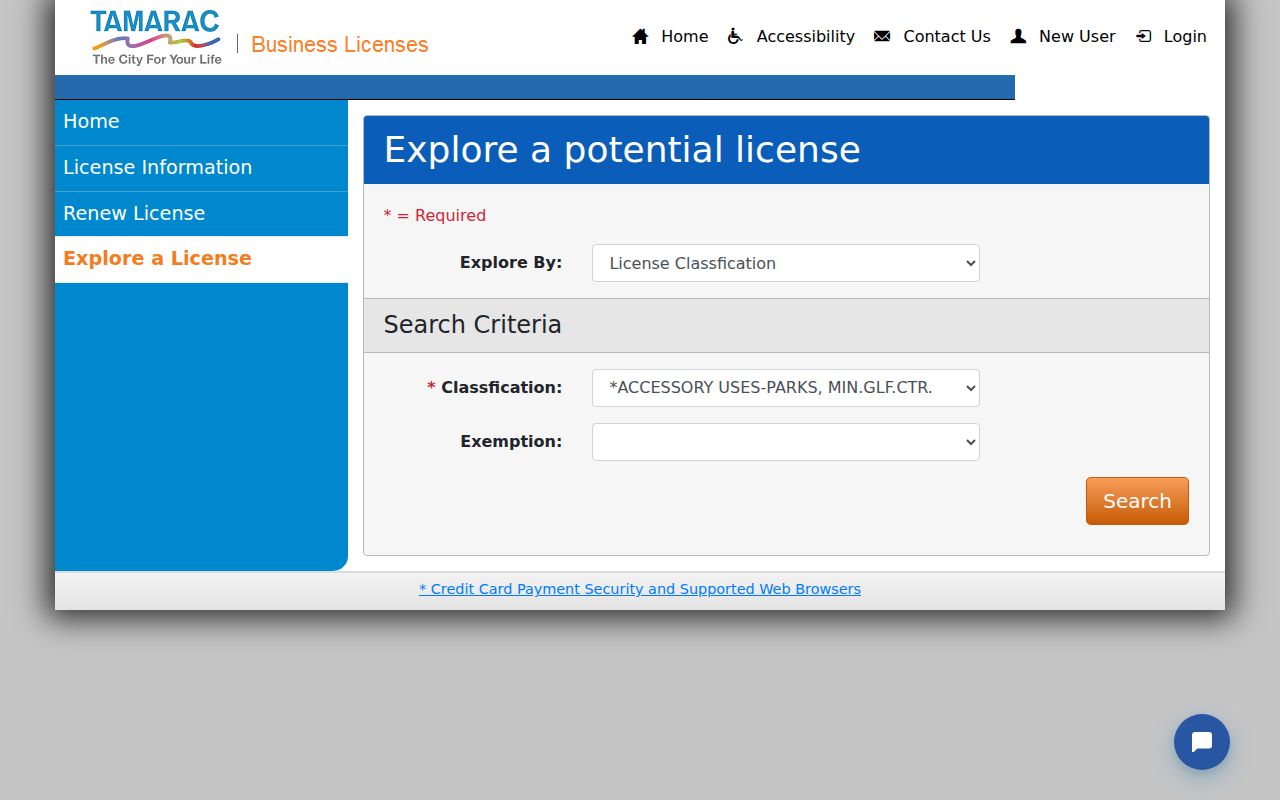
The search screen adds a useful civic layer where parcel data alone cannot explain an address's public role.
If the portal is unclear, Business Revenue can be reached at 954-597-3537. Sunbiz can then confirm a Florida entity's agent or officer, while Broward permit and code records can identify work or compliance history around the block. Keep all three labels exact: business contact, property owner, and resident are different things.
Tamarac Records Around the Block
Permit and code files describe buildings and compliance, not people. Tamarac Click2Gov permits can be searched by permit number, application number, address, parcel number, contractor, owner, and date range. Results may identify permit type, status, description, issue and expiration dates, contractor, valuation, inspections, reviews, and fees. Use them to understand why construction or inspection activity appears at nearby parcels.
When the portal does not expose an older file or a full document, send a focused chapter 119 request to the City Clerk. Name the exact address or parcel, record type, and date span. That keeps the request tied to the block and cuts the chance of paying for a broad search. Code Compliance can also explain the proper access route for an address-based case.
These records add context to a parcel inventory. They can show a roof replacement, addition, contractor link, or code timeline, but they should not be used to infer who was inside the property when the work occurred.
Compare Tamarac Neighbor Sources
Official records are slower to combine, but each field has a known custodian and purpose. Commercial neighbor tools merge public and purchased data, may keep old addresses, and can join two people with the same name. They should not replace a parcel card, voter extract, filed association record, or certified copy.
| Source type | Best use | Main caution |
|---|---|---|
| Official parcel and filing records | Ownership, boundaries, filed roles | Owner or agent may not live there |
| City and association contacts | Public group and meeting contact | Not a private member list |
| Commercial compiled tools | Possible lead only | Stale, merged, or unverified data |
When a fact matters, return to the office that created it. Corrections also belong with that custodian rather than with a copied directory entry.
Tamarac Neighbor Lookup Limits
Renters, children, guests, and many household members do not appear on the property roll. Utility, delivery, congregation, club, watch-group, and private association rosters are not public neighbor lists unless their owners choose to publish them. Florida's Address Confidentiality Program provides substitute addresses for eligible participants, while section 119.071 shields specified classes and sensitive identifiers.
Do not infer a hidden person's address from family ties, an obituary, or a business filing. Record only what the source supports, avoid publishing personal names in a block inventory, and correct errors through the originating custodian. Public access is not permission to monitor someone.
The Broward Clerk of Courts is the official court-file custodian when a lawful Tamarac neighbors inquiry concerns a recorded case rather than private block knowledge.
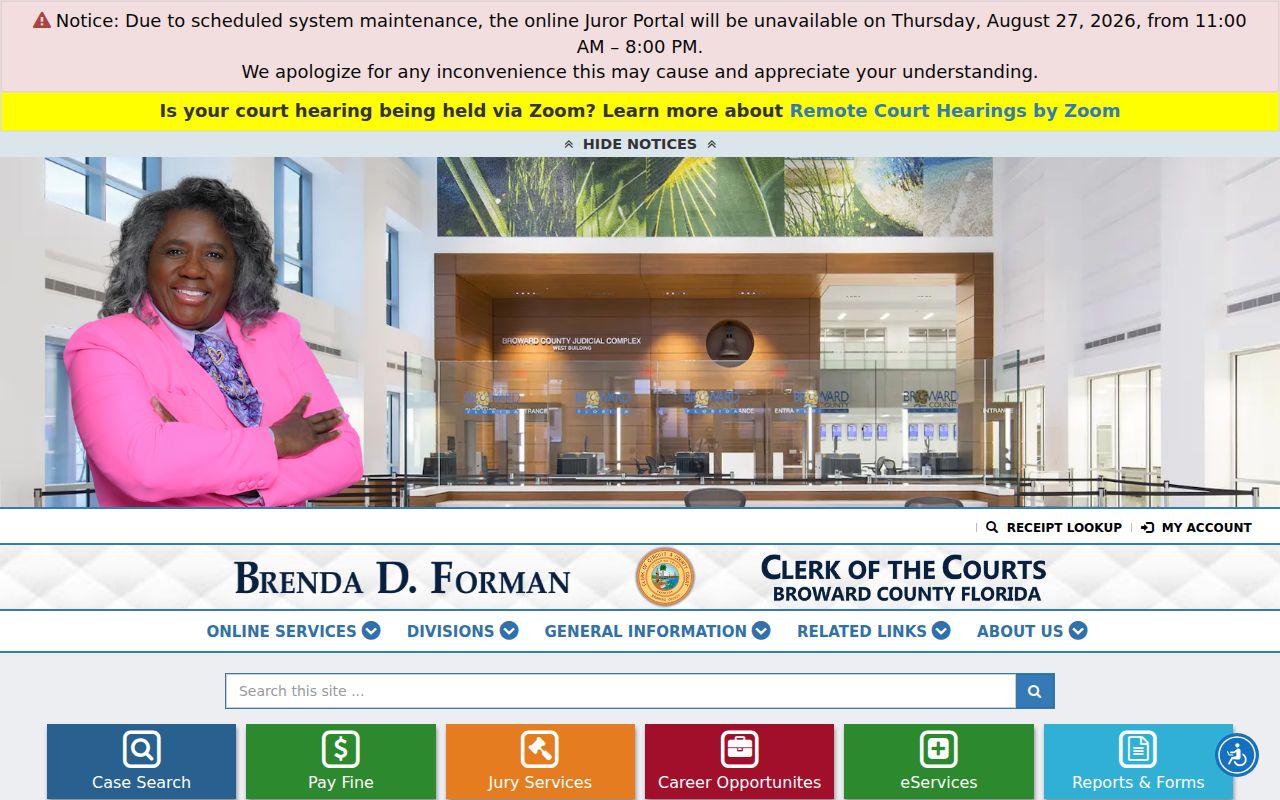
The Clerk landing page keeps court access tied to the public docket and its restrictions.
The Florida vital records hub explains why birth, death, marriage, and dissolution records have separate access rules during Tamarac neighbors research.
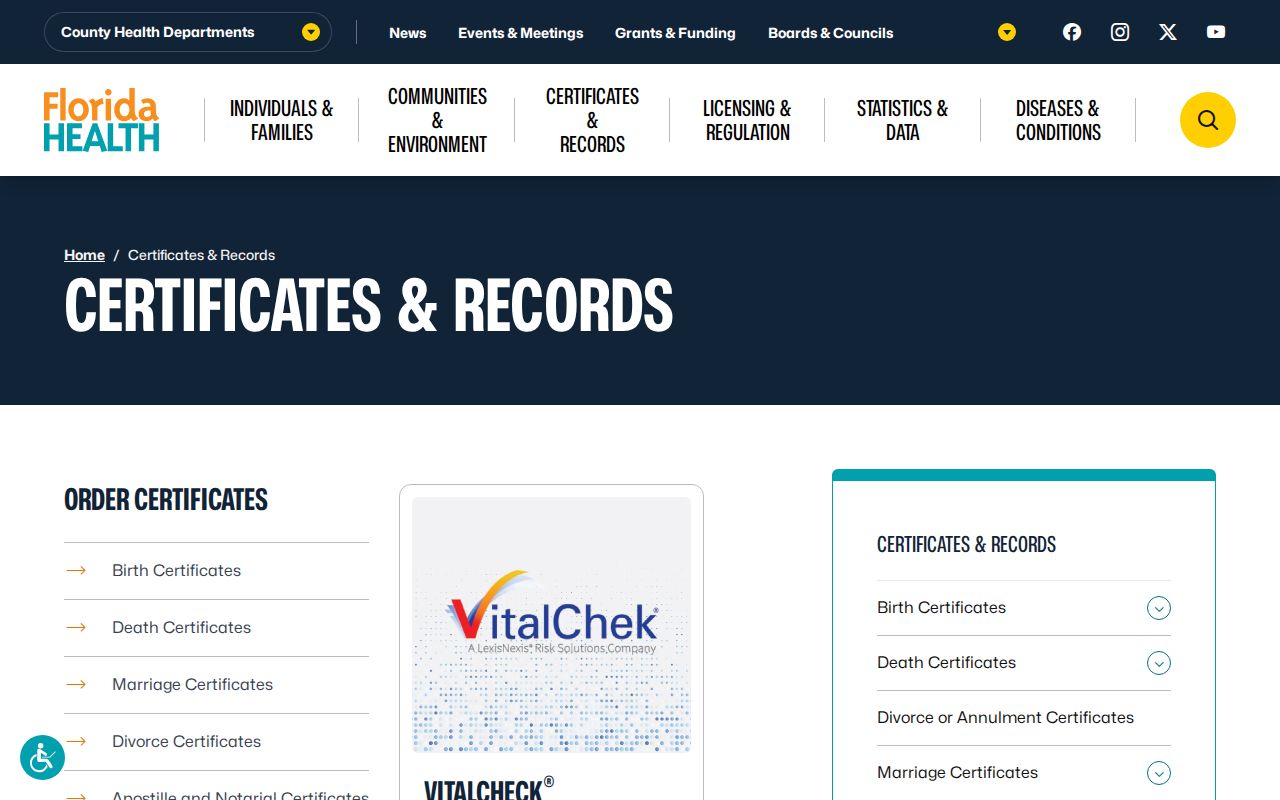
The state hub confirms that proximity on a block never overrides certificate eligibility or confidentiality.
Lawful use. Search Tamarac neighbors only for lawful personal and civic purposes. Never use records to watch, stalk, harass, intimidate, or harm anyone.